Author Archives: Charley Sands

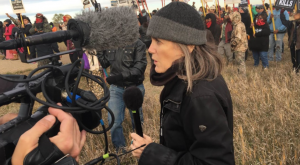
In conversation with Rob Speranza

Rob Speranza has been involved with Sheffield Live! since its early days, helping establish its television side alongside the station’s existing radio operation.

“I did help initially found the television element of Sheffield Live! Sheffield Live! was a radio station for many years before I had anything to do with it.”

The move into television involved significant lobbying, meetings and fundraising, with Rob becoming a company director during the process.

“It was a lot of lobbying and a lot of work. When you’re approached to be a director of a company, there is a lot to do. There were countless meetings, so many meetings, strategy and raising money and all that kind of stuff. I primarily managed money and made content.”

Today, his role is focused heavily on the development of Sheffield Live’s new premises at the old Tap and Barrel pub, which is undergoing extensive refurbishment.

“We’re looking at tenders and costs every week  now, where the board is meeting every two weeks, to figure out the right method and the right costs. They’re raising money.”

Despite the practical challenges, Rob sees the new building as an exciting opportunity for Sheffield Live! and the wider cultural scene in Castlegate and Sheffield more generally.

“It’s an exciting time,” he said, with the board also looking ahead to events including the upcoming Castlegate Festival.

Outside Sheffield Live, Rob has spent more than two decades working as a filmmaker. He also runs the South Yorkshire Filmmakers Network (the SYFN), which has grown considerably since its creation.

“The network has grown to be the largest network for filmmakers outside of London now. This has been going on for 22 years.”

His work at the SYFN involves independent filmmaking, promotional films, education and film programming. He has made seven feature films as either a producer or line producer, while also directing short films.

“I’ve made seven feature films as either a producer or a line producer. But I also direct and I’ve been directing a few shorts.”

His relationship with Sheffield began in 1996, when he moved to the city to study for a master’s degree at the University of Sheffield. His academic work eventually developed into a PhD examining the relationship between film and poetry.

“I got my doctorate in 2004 but instead of going down the educational route entirely, I still do it part time.”

For Rob, his filmmaking background and work running the SYFN have also shaped his approach to Sheffield Live, particularly its role in giving people a platform.

“So it’s all about listening and trying to pay attention to what your audience wants and then providing a platform for them, and Sheffield Live has done that.”

Looking ahead, Rob is particularly excited about Sheffield Live!’s influence as it moves to its new home.

“I think there’s a lot of possibility in that building. I think it can rapidly expand between the studio work and the pub and what looks like could be a nice beer garden.”

Ultimately, he hopes the new space will contribute to Sheffield’s growing cultural scene.

“I want to see that continue to expand and I want to see people respond to that and head in that direction when it starts to become less under construction and become an established community space.”

In Conversation with Mike Thompson, Director of RiteTrax

As RiteTrax approaches its 11th anniversary, founder Mike Thompson is reflecting on the organisation’s journey from an idea developed in prison to a Sheffield social enterprise supporting young people through music.

Thompson, originally from Greater Manchester, moved to Sheffield at 19 to study history. Having played in bands since the age of 13, he became involved in organising house parties, gigs and club nights while at university.

In his third year, Thompson was arrested for selling drugs and spent just over a year in prison. It was during this time that the idea for RiteTrax began to take shape.

“I was going to come out unemployed, and Adam was unemployed,” he says, referring to co-founder Adam, who he had previously played in a band with. Both were passionate about music but did not want to work in a typical 9-to-5 job.

While in prison, Thompson met Jackie Hewitt-Main, who ran The Cascade Foundation, an organisation supporting prisoners with learning difficulties and acquired brain injuries. Having a degree himself, Thompson began helping Hewitt-Main teach prisoners, an experience which he says was a major inspiration for his later community work.

He also completed a business course while in open prison, using the time to develop Ritetrax as a hypothetical project. After returning home in 2015, Thompson and Adam incorporated the company on September 26th of that year.

Their first event followed at Yellow Arch Studios in October 2015, raising around £1,500 through people supporting Thompson’s vision. In the early years, much of the work was unpaid.

By 2017, RiteTrax had established a base in Castlegate through arts development charity CADS. The building was initially intended simply as a place to work from, but its size meant it could also become a music venue.

“We didn’t really want a music venue,” Thompson says. “We just kind of wanted a place to work from, and it just happens to be big enough to become a music venue.”

The organisation gradually developed its licence and facilities, before closing for around 18 months to redevelop the space. It was ready to reopen just as the COVID-19 lockdown began. RiteTrax eventually reopened with a full licence in summer 2021.

Today, Thompson describes his role as “a bit of everything”, from fundraising and administration to managing staff, while RiteTrax runs sessions with young people and adults and operates its venue and bar.

Music remains central to the organisation’s work, including its involvement in the annual Castlegate Festival. The festival’s music programme has grown since its beginnings in 2018, when an outdoor event was organised on the street.

This year, the festival will focus on local music across Castlegate’s venues. At Plot 22, the evening will begin with a showcase of young people who have worked with the organisation, followed by an open-decks session for local DJs and an afterparty featuring DJs who have previously taken part.

Thompson says the organisation particularly wants to encourage more women and beginners to apply for its open decks opportunities, with the organisation aiming to create line-ups where people can see themselves represented.

The festival will also be free to attend, something Thompson sees as important to making it accessible and allowing people to move between venues.

Looking ahead, Thompson says he would like to see greater consistency in funding, allowing the festival to develop rather than having significantly different budgets each year.

He also hopes the development of the Castlegate area will eventually provide a central space for the festival and allow local arts and music organisations to collaborate more closely.

“Once everywhere’s established and the dust from all the works kind of settled, we can all figure out how we’re going to work together and make it work a bit better,” he says.

For Thompson, the longer-term ambition is for Castlegate to develop a wider calendar of events, particularly during the spring and summer.

“We’re hoping that we’ll be here for a long time,” he says, “and the festival can just carry on growing each year.”

How the markets helped shape Castlegate

The Castlegate we know today was largely shaped by plans made almost a century ago.

In the early 20th century, Sheffield Corporation was looking at ways to expand and modernise the city’s markets. The existing market and slaughterhouse facilities around Castle Hill were increasingly seen as in need of renewal, leading to the Sheffield Corporation Act of 1901, which transferred control of the city’s markets to the council.

The plans were interrupted by the First World War, and it was not until the 1920s that the redevelopment began to take shape.

A Sheffield Corporation plan from November 1922 shows the scale of the proposals. It included plans to widen Waingate and Exchange Street, as well as a new road running between Blonk Street and Waingate. Land was also set aside for a new market, which would become Castle Hill Market.

The changes would transform the area around the site of Sheffield Castle.

During the late 1920s, construction began on Castle Hill Market. The new road was also taking shape, eventually becoming Castlegate and linking Waingate with Blonk Street Bridge.

The redevelopment changed the streets around the market as well as the market itself. Waingate was widened and buildings along its frontage were redeveloped, creating much of the layout that would remain familiar for decades.

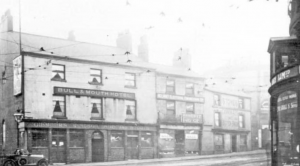
Among the buildings incorporated into this changing streetscape was the Bull & Mouth pub, now 42 Waingate and the future home of Sheffield Live!. A plan from the 1920’s shows the Bull & Mouth Hotel standing on the eastern side of Waingate, alongside the Anvil Inn and Rose and Crown.

By 1930, the new market was ready to open. The Fitzalan Market closed on 24 April, with its traders transferring to Castle Hill Market, which opened the following day.

The market became a major part of life in the area. Further changes followed over the following decades, eventually leading to the construction of Castle Market in 1959 to accommodate traders from the Norfolk Market Hall.

The markets remained at Castlegate for much of the 20th century, but eventually moved away from the area. In 2013, Sheffield’s markets were relocated to the Moor and the Castle Market buildings were demolished.

Now the area is changing once again.

The former Castle Market site is being transformed into a new public park, with archaeological work uncovering parts of Sheffield Castle and plans to open up the River Sheaf.

Nearly a century after Sheffield began reshaping Castle Hill for a new generation of markets, Castlegate is being reshaped once more, this time bringing the city’s much older history back into view.

“I can’t wait to see what happens next”: In conversation with Rob Wellington, presenter of Mid-afternoon Memories

Rob presents his show, Mid-afternoon Memories from 3-5pm on Sheffield Live!

His show follows a 2 part model: “the first hour is full of Motown music and the second hour has a different theme each week”. 

One of Rob’s recent themes was “The Accommodation Playlist”, where he talked about the iconic Park Hill Flats in Sheffield City Center, and did a shout out “to all those who are listening from cramped student flats”. 

Rob has been doing his show for the past 10 years, and originally hosted it during the “graveyard shift” starting at 11pm, where it was named “Midnight Memories” before he moved to an earlier time slot. 

Outside of Sheffield Live!, Rob is a taxi driver in Sheffield and has also been a DJ for thirty years. Rob has DJ’d at school discos, hotels, birthday parties and weddings all across the city. 

Rob told us he is “very excited” about Sheffield Live! moving to 42 Waingate and has been helping out frequently with the renovation work. He is particularly excited to “see what the new radio studios will look like” and eventually record his show from there, where he has pleasant memories of visiting when it was the Tap and Barrel pub. 

When talking about why Sheffield Live! is so important to Rob, he told us he appreciates “how varied the shows are” and often listens to it whilst he is driving his taxi, messaging fellow presenters to comment on their shows. He especially enjoys radio shows that feature Reggae music and Northern Soul. 

“Sheffield Live! brings life to the community”: In conversation with Mauricio, presenter of Latino Times

Mauricio, host of Latino Times on Sheffield Live! each Monday between 5 and 7pm, has lived in Sheffield since 1975. 

Originally from Chile, Mauricio uses his radio show to highlight a variety of music genres from countries in Latin America. His show gives the opportunity for “everyone to listen to and learn more about the variety of the music from South America.” 

Mauricio has worked many different jobs throughout his life such as being a waiter, a bin man, a graphic designer and so much more. He joined Sheffield Live! after being introduced by a friend, who he later presented the show with. 

At the time, he was studying Communication Arts and became particularly skilled in interview techniques. Mauricio then adapted his skills from this course into his radio show as he was made aware that “there were no shows on Sheffield Live! that spotlighted Hispanic music and culture”. 

Latino Times was launched in 2009 and is described by Mauricio as a show of many parts. 

He told us: “Within the show you listen to a soul show, and R&B show, and a rock show all in one”. 

His most recent show included a range of music in genres such as rock, samba, jazz and folk music. 

Mauricio also uses his platform to “talk about the politics going on in Latin America… so people can learn a little bit more about the world”.

Mauricio acknowledges that after the Covid 19 lockdown, community radio had to adapt to restrictions and was not as active in that time, but he is “really happy I’ve been doing the show for all these years… because Sheffield Live! is the perfect community project.”

When talking to Mauricio about his favourite genres of music, he said: “I like all sorts of music, except for Reggaeton… I love heavy rock”. 

Mauricio believes Sheffield Live! is an important institution as it “brings life to the community and gives a voice to every group… It gives the diverse Sheffield community a voice.”


Castlegate Festival 2026 programme announced

The Castlegate Festival 2026 programme has been announced, including workshops and radio from Sheffield Live!

The tenth edition of the Castlegate Festival celebrates local organisations and institutions within the Castlegate area of Sheffield between September 12th and 20th 2026. 

The festival is a celebration of heritage as well as the rich arts, music and market scene, featuring food, music and workshops from a variety of community organisations including Sheffield Live!

On the 19th and 20th of September, Sheffield Live! Is bringing a dedicated radio station, Castlegate Festival Radio to the festival from our new home, 42 Waingate. Attendees of the festival can come along to see the building and contribute their stories as the radio broadcasts across the weekend plus listen to live music and chat from our team on DAB and online. 

Also in 42 Waingate, the old Tap and Barrel pub, Sheffield Live! Will be hosting a “Future Memories” exhibition, highlighting the history of the building whilst sharing personal stories and memories of those in the community. During this event, creative workshops will be held on the past, present and future of the Castlegate area and the former pub itself. 

More information about Castlegate Festival can be found at https://www.welcometosheffield.co.uk/visit/whats-on/castlegate-festival/

Keep an eye out on Castlegate Festival Radio for more updates about our festival schedule. 


Democracy Now! documentary showing in Sheffield

Amy Goodman, host of Democracy Now! brings new documentary film Steal This Story, Please! to Sheffield in partnership with Sheffield Live!
Democracy Now! produces a daily, global, independent news hour hosted by award-winning journalists Amy Goodman and Juan González. They report daily on international political breaking news and aim to highlight a diverse range of voices and community. 
Sheffield Live! has been a broadcast partner with Democracy Now since 2014, being the first community TV channel in the UK to carry the daily broadcast. Sheffield Live! recently hosted two ‘Live from Sheffield’ productions of Democracy Now with Amy Goodman.
The film Steal this story, please! follows Goodman’ quest to expose stories of international importance that have been under-reported by mainstream media.
The documentary film takes us behind the scenes with Amy, the granddaughter of an Orthodox rabbi, raised in a tradition of asking hard questions, as she navigates a news landscape reshaped by technology, corporate consolidation, and political assaults on truth itself.
Partnered with Sheffield Live!, Steal this story, please!, will have a screening at Sheffield’s Showroom Cinema on Monday 31st August at 6pm as part of the Showroom’s DocNights series.

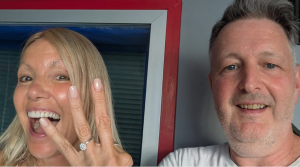
Sheffield Live! presenter proposes to fiancée live on air

Sheffield Live! presenter, Ben Keegan, proposed to his partner, Tracey Rogers, during his live radio show, Deserted Ireland Discs.

As Tracey discussed the final track of the show, Summer Wine by Nancy Sinatra and Lee Hazelwood, reminiscing about a recent road trip on the way back from France, Ben asked her one more question before the song started playing. He got down on one knee and asked “Tracey, would you do me the honour of marrying me?” whilst presenting an engagement ring.

Initially, Tracey responded with laughter and asked if he “was tying his shoelaces again”. When speaking to the couple after this event, Tracey told us that Ben had previously got down on one knee on a trip to Venice, and then proceeded to tie his shoelaces.

When Tracey realised Ben was genuinely proposing to her, she went silent for around four seconds, which she told us was “a long time to be quiet for me”. Her answer to the big question was “Yes. There was no question that I would not say yes.”

Reflecting on the lead up to the proposal, Ben said “We’ve been together for twelve years in September and I love her very much… Once I decided to ask her, I thought, how should I ask her?”

“I realised I had the perfect platform with my radio show. I’ve been asking Tracey to come on this show for a while now, so I knew she wouldn’t suspect a thing.”

On Deserted Ireland Disks, a guest is invited each week to discuss their life and play songs related to specific moments and memories. Ben used this platform to create a new core memory for himself and Tracey on Sheffield Live!

© 2026 Sheffield Live! Made in Sheffield. Made by You. Problems with the website? Let us know! Powered by